
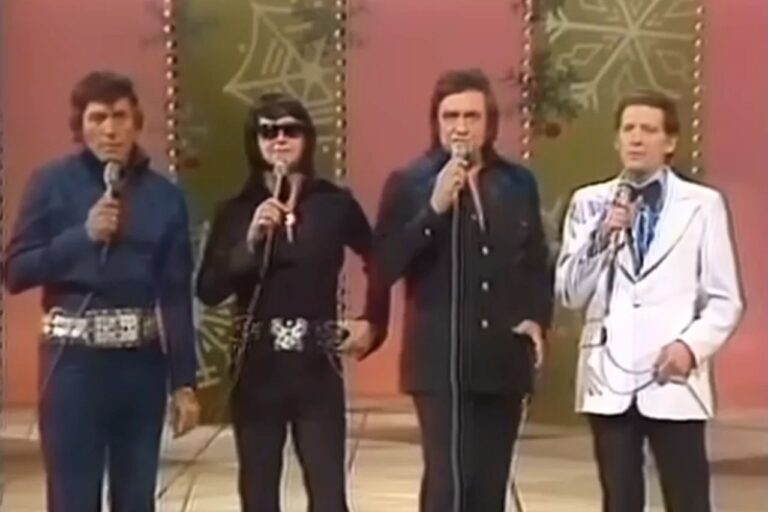
Johnny Cash, Roy Orbison, Carl Perkins, and Jerry Lee Lewis shared a memorable musical tribute to Elvis Presley during Cash’s 1977 Christmas television special.
Their choice was “This Train Is Bound for Glory,” a gospel song that brought the occasion back to a side of Elvis his fellow musicians remembered well.
Elvis had died on August 16, 1977. The special was recorded that October and broadcast on CBS on November 30, placing the performance just months after his death.
The names alone made it an extraordinary gathering. But the dedication gave their appearance together a much more personal meaning.
A Christmas Special With a Tribute to an Absent Friend
Cash’s holiday broadcast featured June Carter Cash, Roy Clark and the Statler Brothers, alongside the three fellow Sun Records veterans who joined him in remembering Elvis.
There was plenty of familiar music on the program. Perkins performed “Blue Suede Shoes,” Orbison sang “Oh, Pretty Woman,” and Lewis delivered “Whole Lot of Shakin’ Going On.” It was quite a lineup for a Christmas special, really.
The Elvis tribute gave those performances a different context. These were artists whose careers reached back to the same Memphis recording scene that had helped launch Presley.
Before the song, Cash recalled appearing as a guest on a concert where Elvis was the star.
He also spoke about Presley’s love of gospel music, ending his introduction with a simple dedication: “This song is for Elvis.”
That was enough. The connection between the men, and the reason for the song, needed little explaining.
Let’s watch the video below:
Why “This Train Is Bound for Glory” Fit the Occasion
The song choice is part of what makes this tribute so interesting.
A gathering of Cash, Orbison, Perkins and Lewis could easily have turned into a celebration of Elvis’s biggest hits.
Instead, they chose gospel. It brought the focus back to the music he loved, away from the jumpsuits, the movie roles and the enormous fame.
Cash’s introduction added something a list of Elvis’s achievements never could. He remembered being a guest on a show where Presley was already the star.
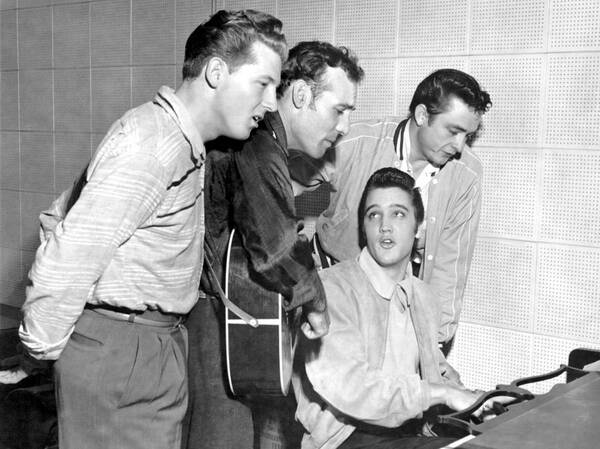
There was a remarkable connection to the old Sun Studio days, too. In December 1956, Elvis, Cash, Perkins and Lewis had gathered for the session remembered as the Million Dollar Quartet, playing gospel and country songs among other favorites.
Twenty-one years later, three of those men were together again, with Roy Orbison joining them. Gospel was once more part of the occasion, only this time Elvis was the person being remembered.
The performance also came before decades of anniversary concerts and retrospective documentaries.
Elvis had been gone for only a short time. These musicians were paying tribute to someone whose career had developed alongside their own, and whose absence was still new.
That timing gives the recording a significance that later tributes, however beautifully performed, could never quite repeat.